The practice
Al-Qatt Al-Asiri is a women-led tradition of geometric interior wall decoration originating in the Asir region of Saudi Arabia.
MA Creative Research Project / King's College London
A Creative Research Inquiry into Al-Qatt Al-Asiri in Asir, Saudi Arabia
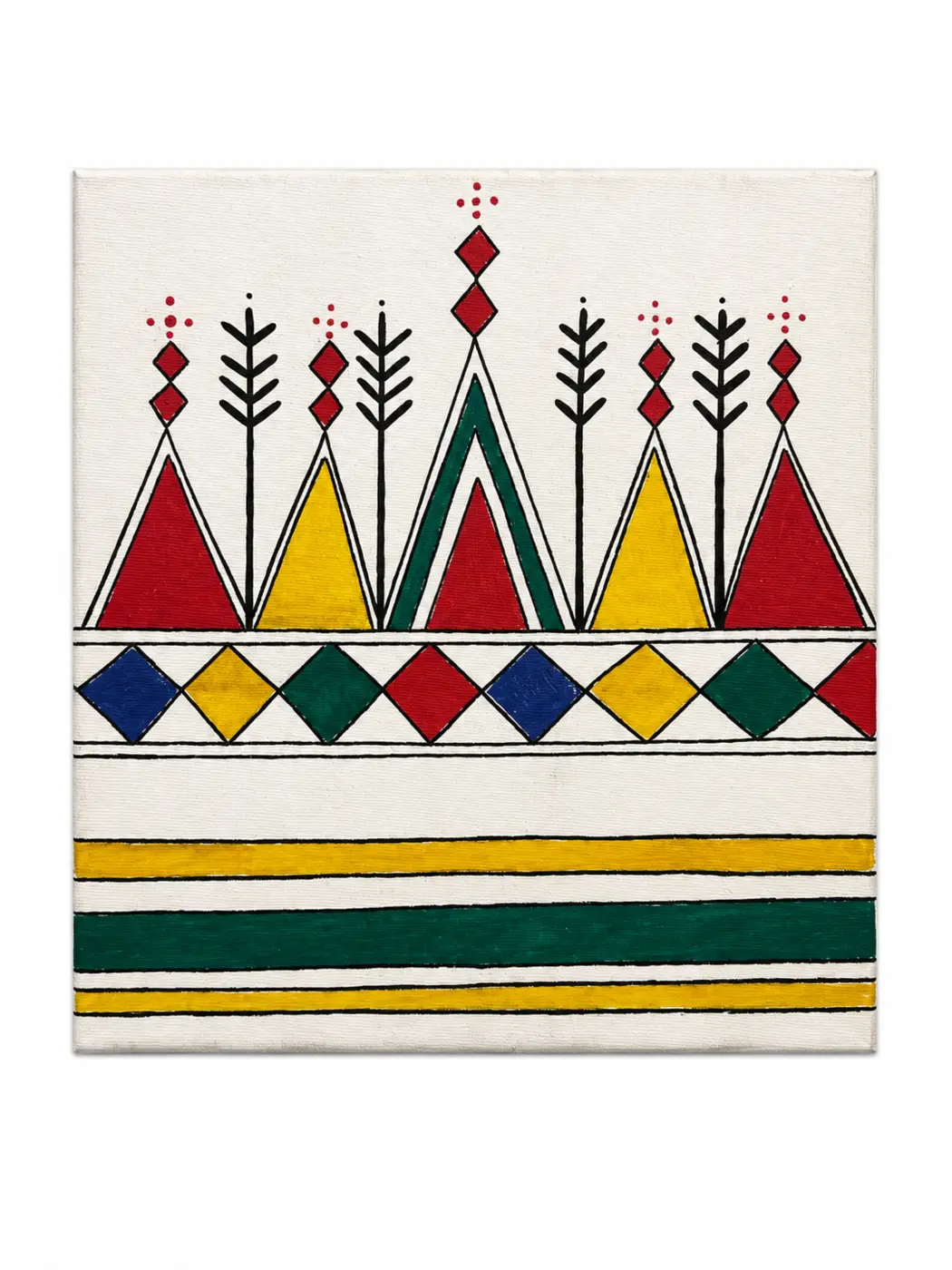
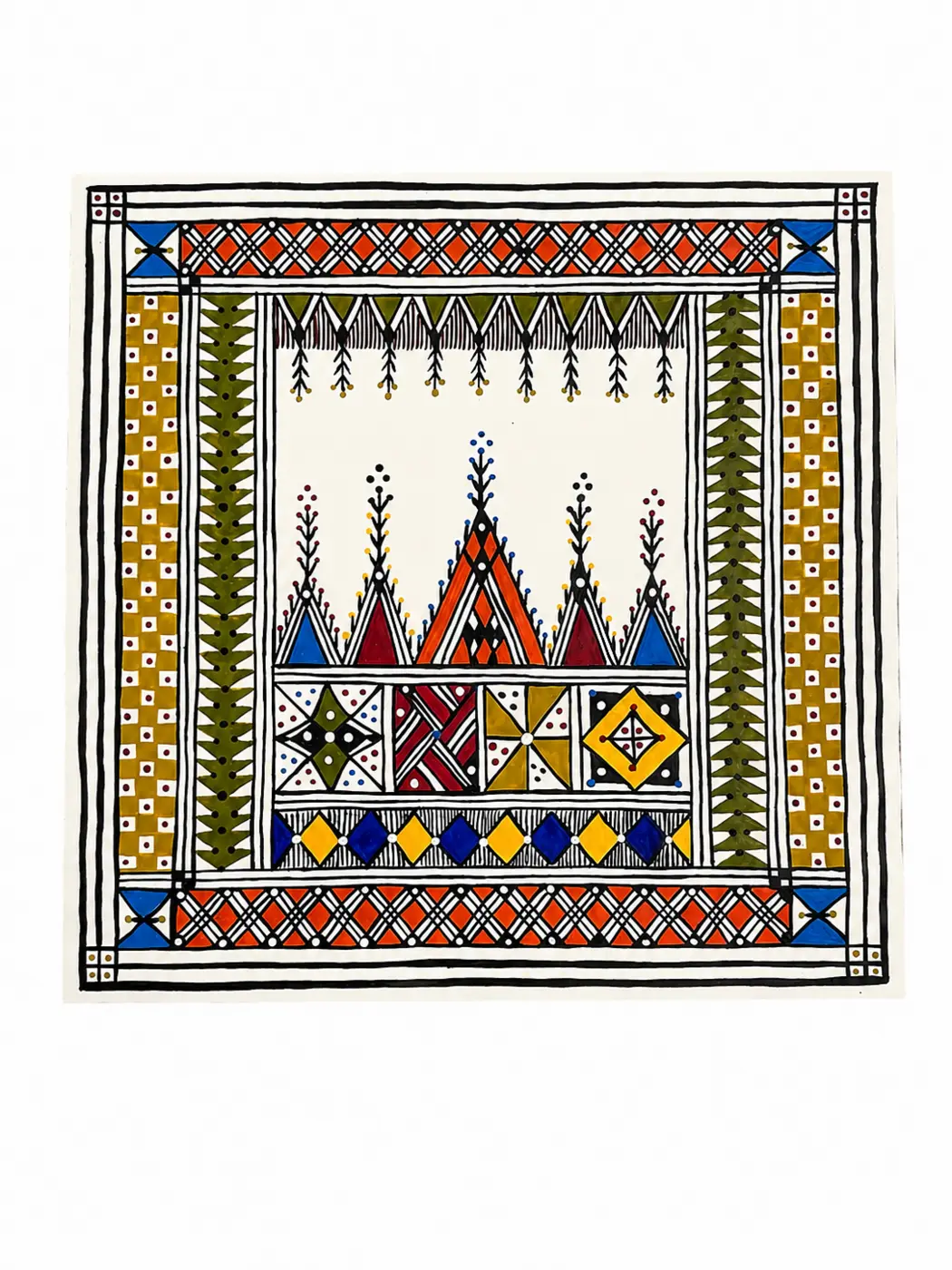
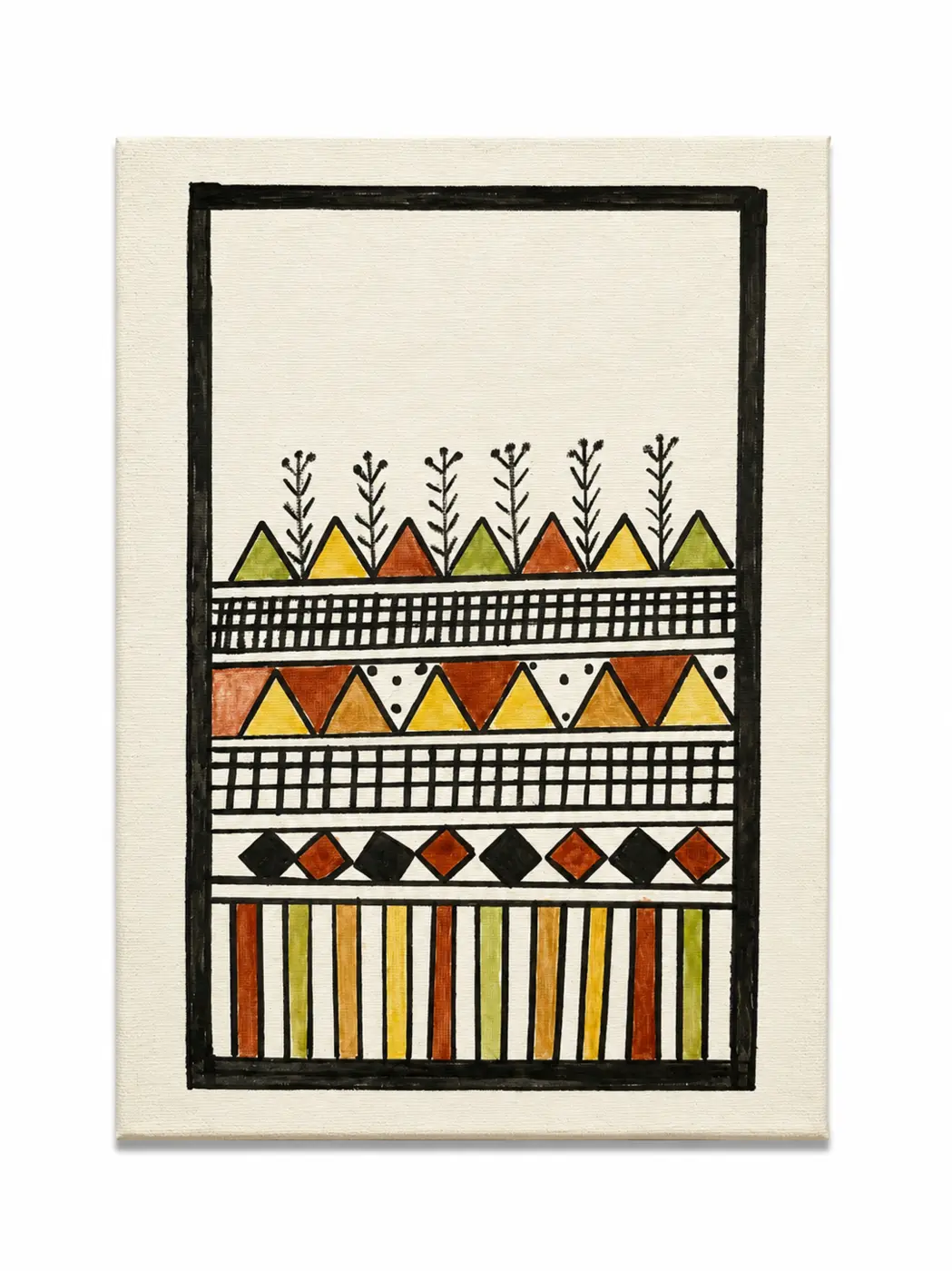
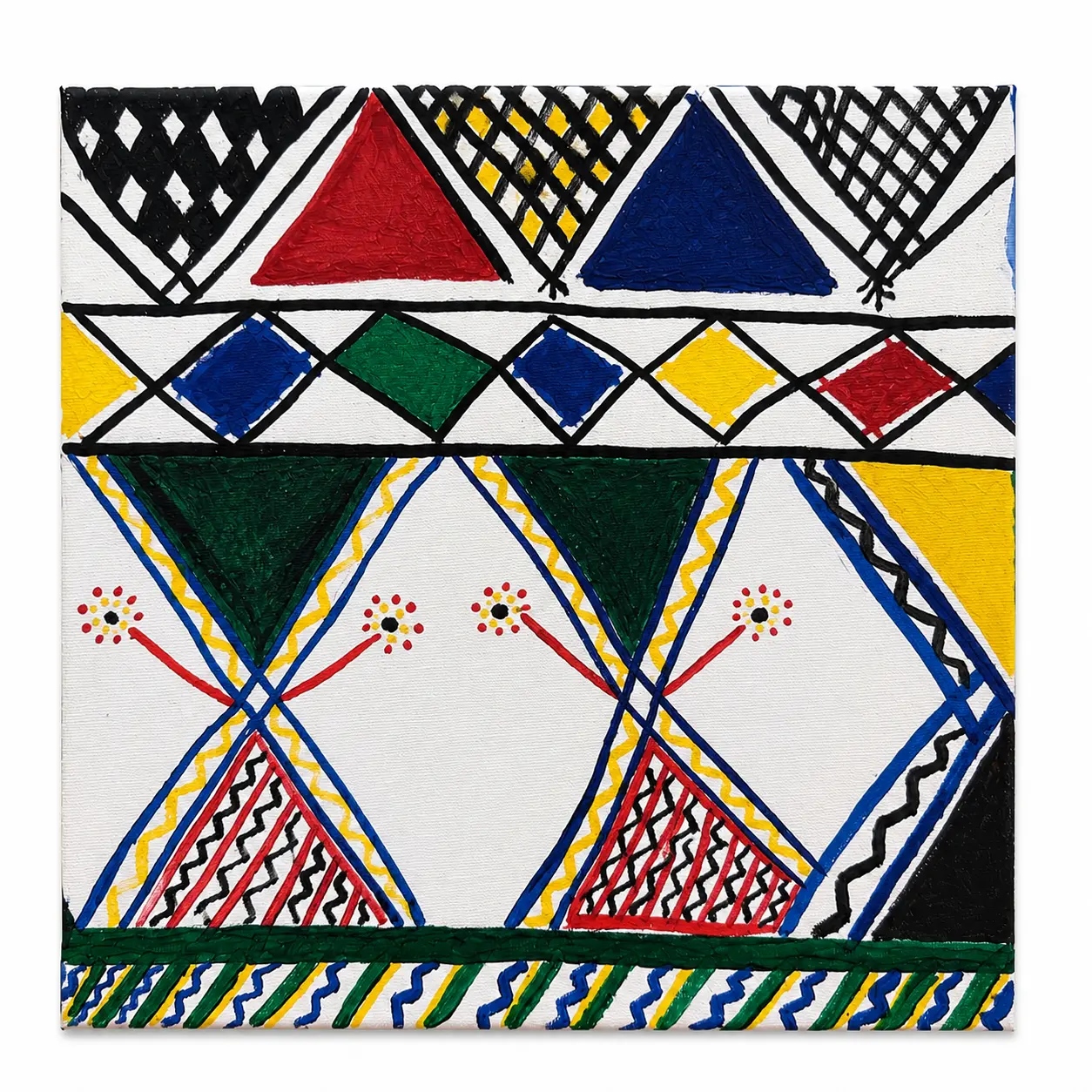
Ten women in Asir each painted one canvas. All ten are glad to see Al-Qatt circulating. What they defend is not the shape but what the shape carries.
The question
For generations, women in Asir painted together, learned from one another, and transformed domestic walls into shared cultural memory. This exhibition presents ten paintings made in answer to that history, and what the women who made them say has changed.
The context
Al-Qatt Al-Asiri is a women-led tradition of geometric interior wall decoration originating in the Asir region of Saudi Arabia.
The practice was historically learned through observation, participation, family relationships, and collective making.
Following increased recognition and safeguarding, Al-Qatt now appears in institutional training, tourism, products, public surfaces, and commercial environments.
Ten paintings by ten women, held as five family pairs, alongside the rooms, tools and colours they came from.
Domestic surface Institutional frame
The paintings
Each pair brings together two generations from the same family. Their paintings are held as related works rather than isolated images.
Ten, together
The collective canvas was never made. Alaa has painted collectively once, found it valuable, and prefers to work alone for the freedom it gives her over motifs and colours. Sharifah tried it and prefers to work alone because group work can change the idea she had in mind. Wejdan enjoyed painting with her grandmother but noted that another person may paint over the colour she had chosen. What has been individualised is not only the circumstance but the preference, and that is a finding the collective canvas would have hidden.
It is better with the women, because each adds something of her taste to the others.— Fatimah Faye
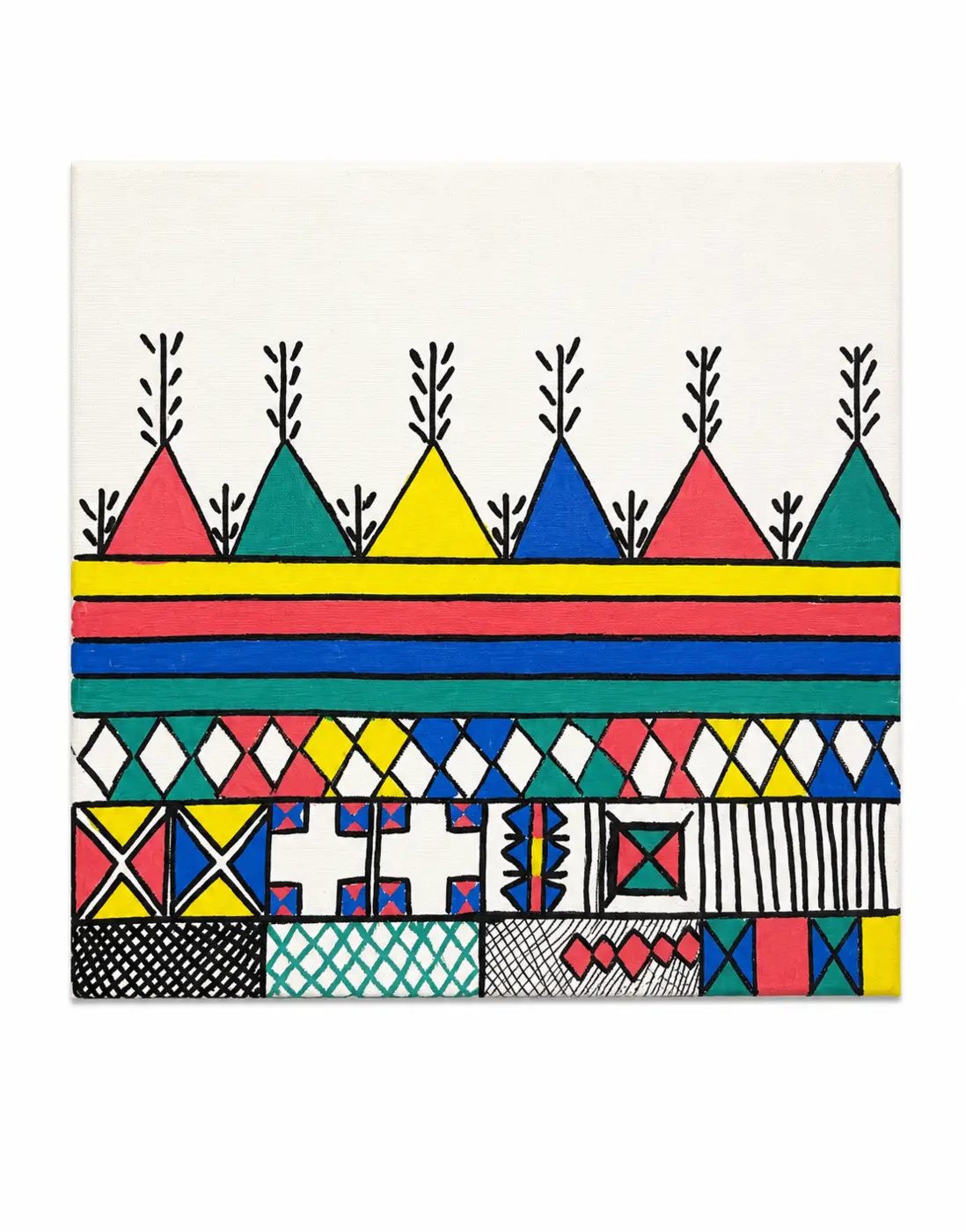
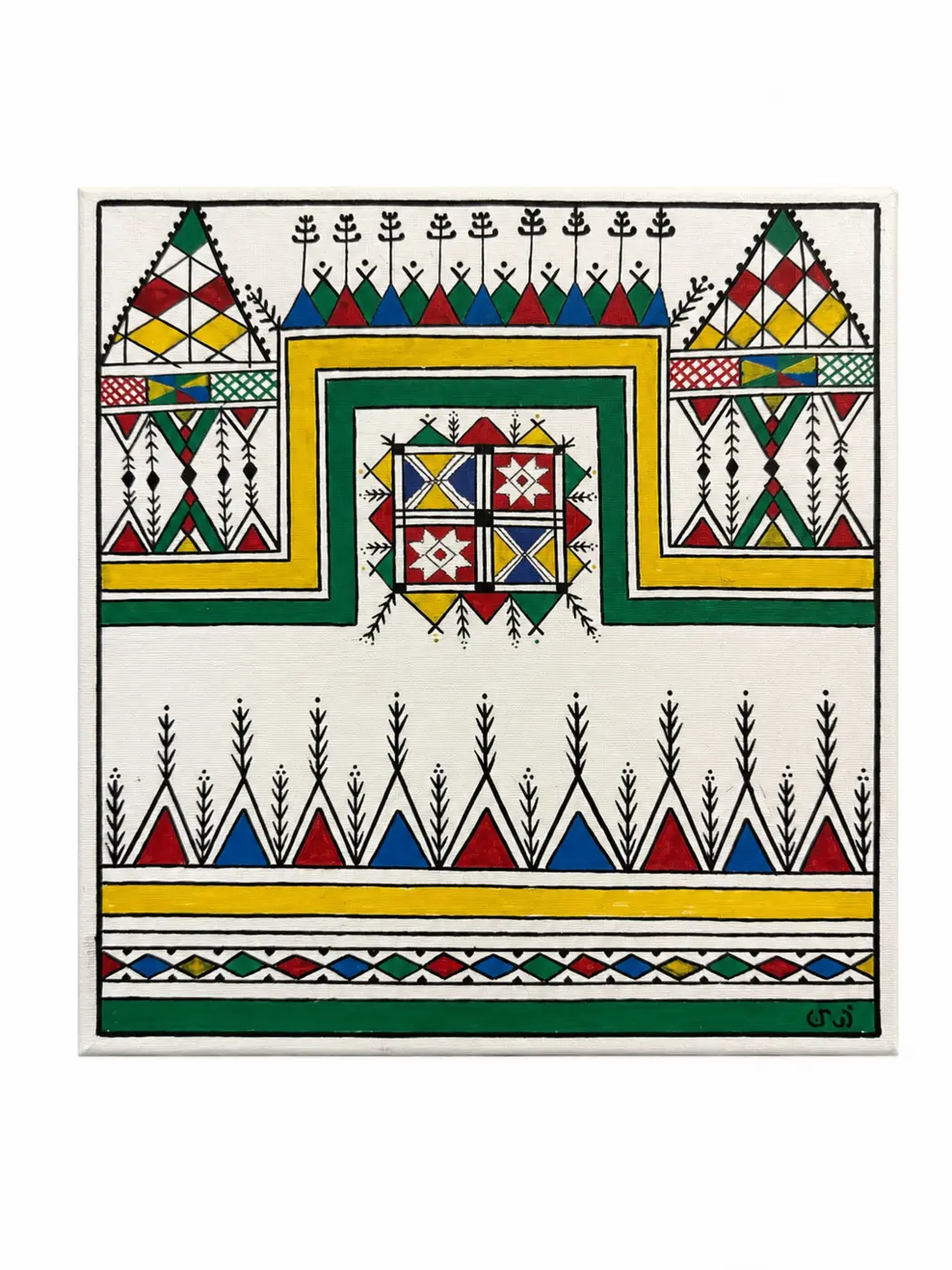
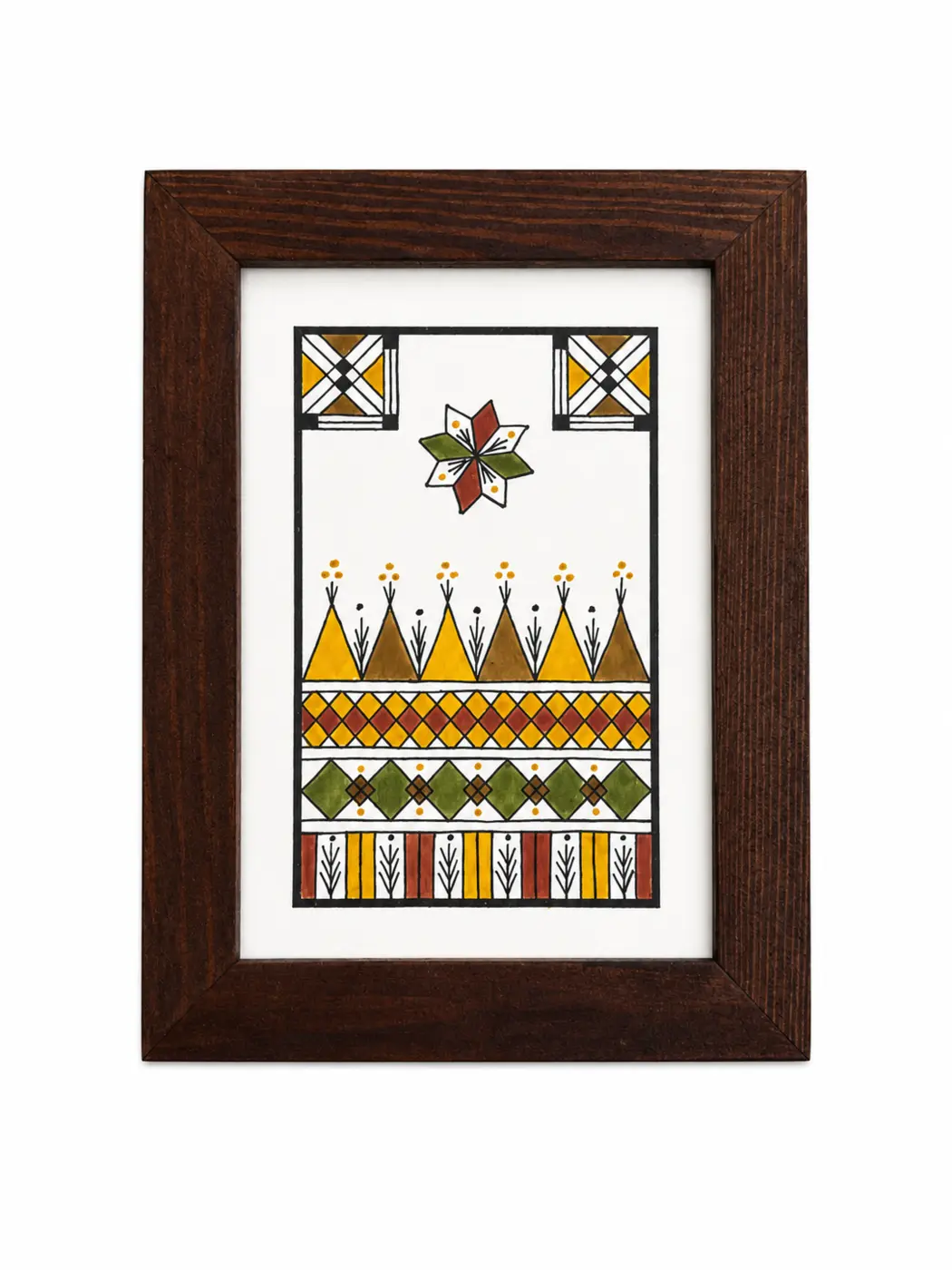
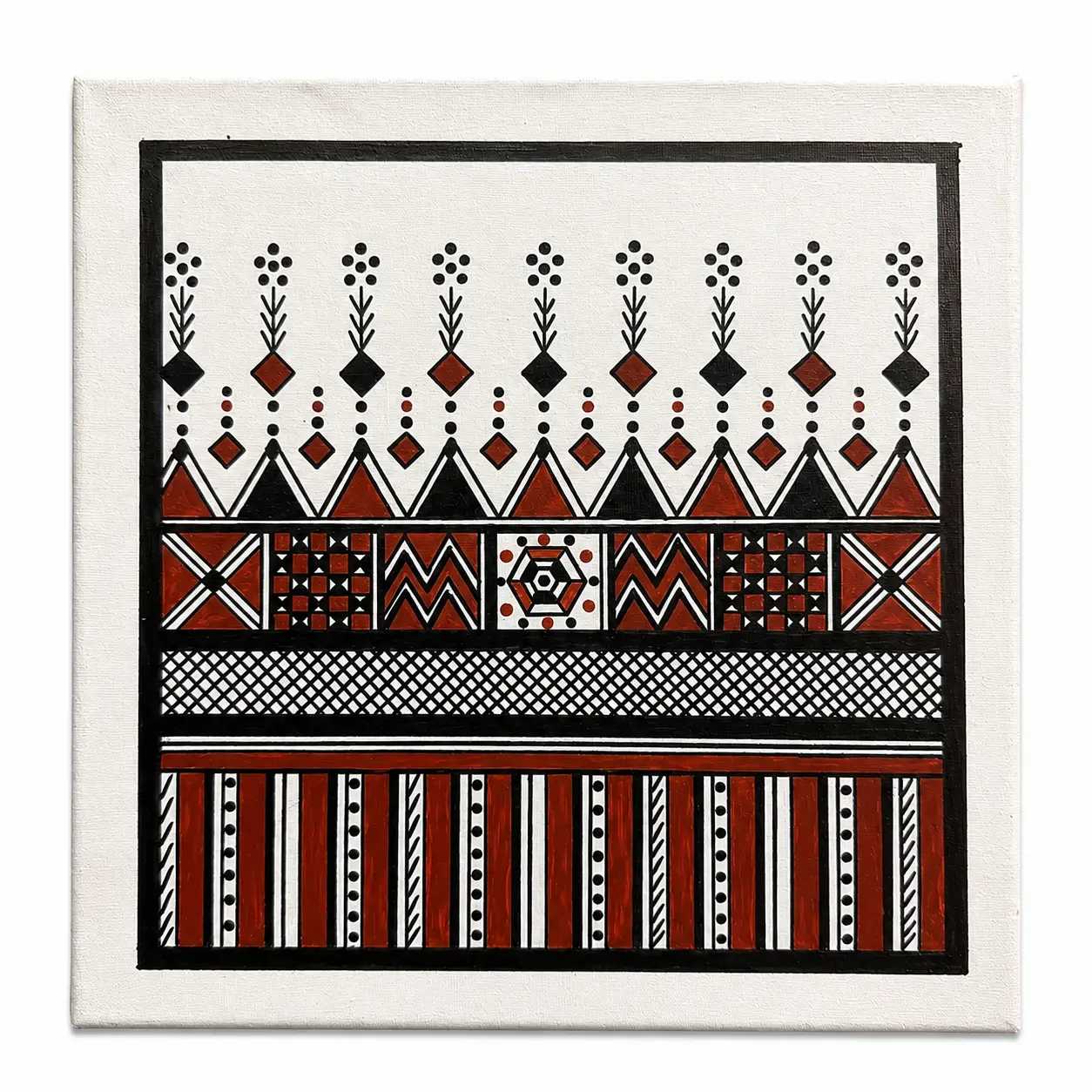
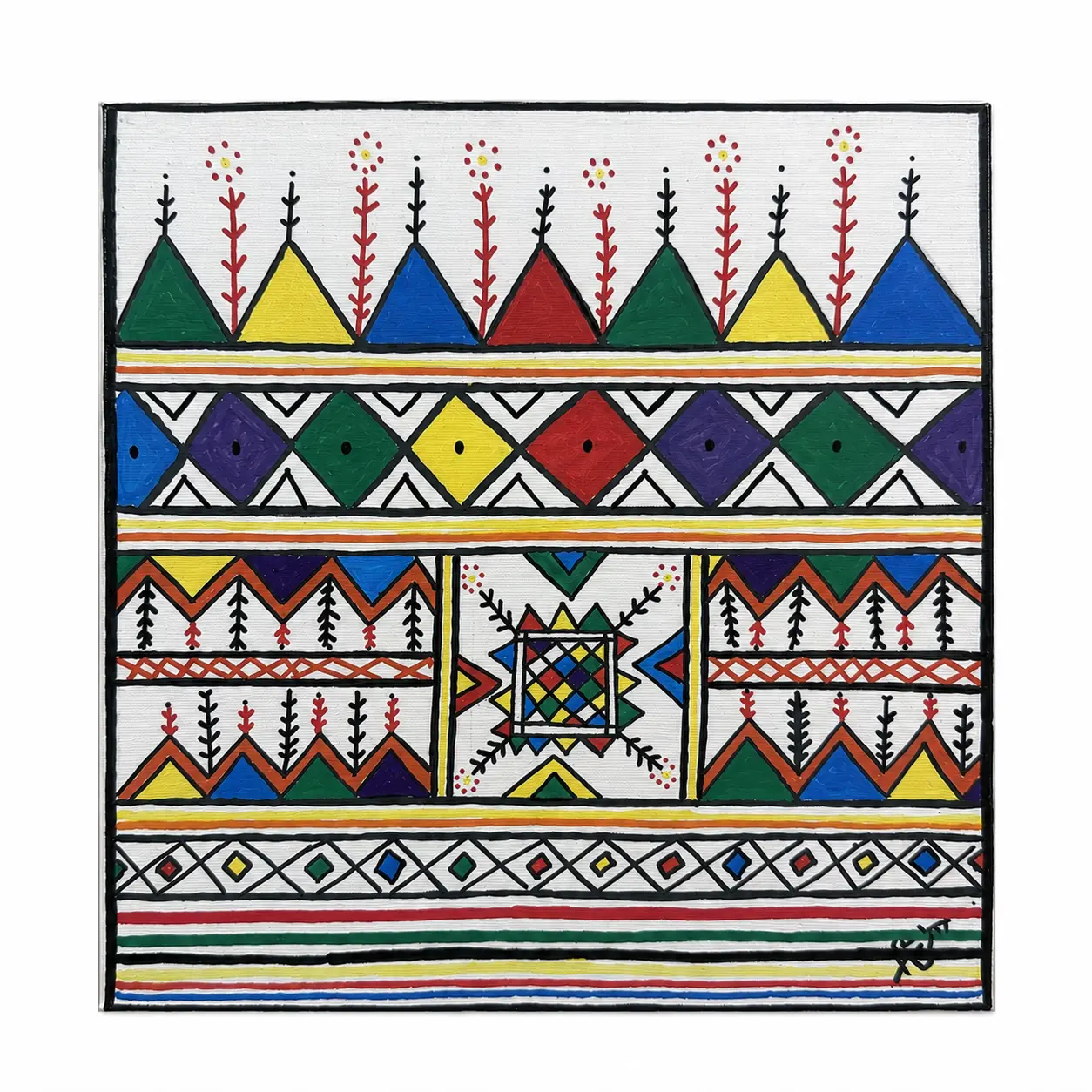
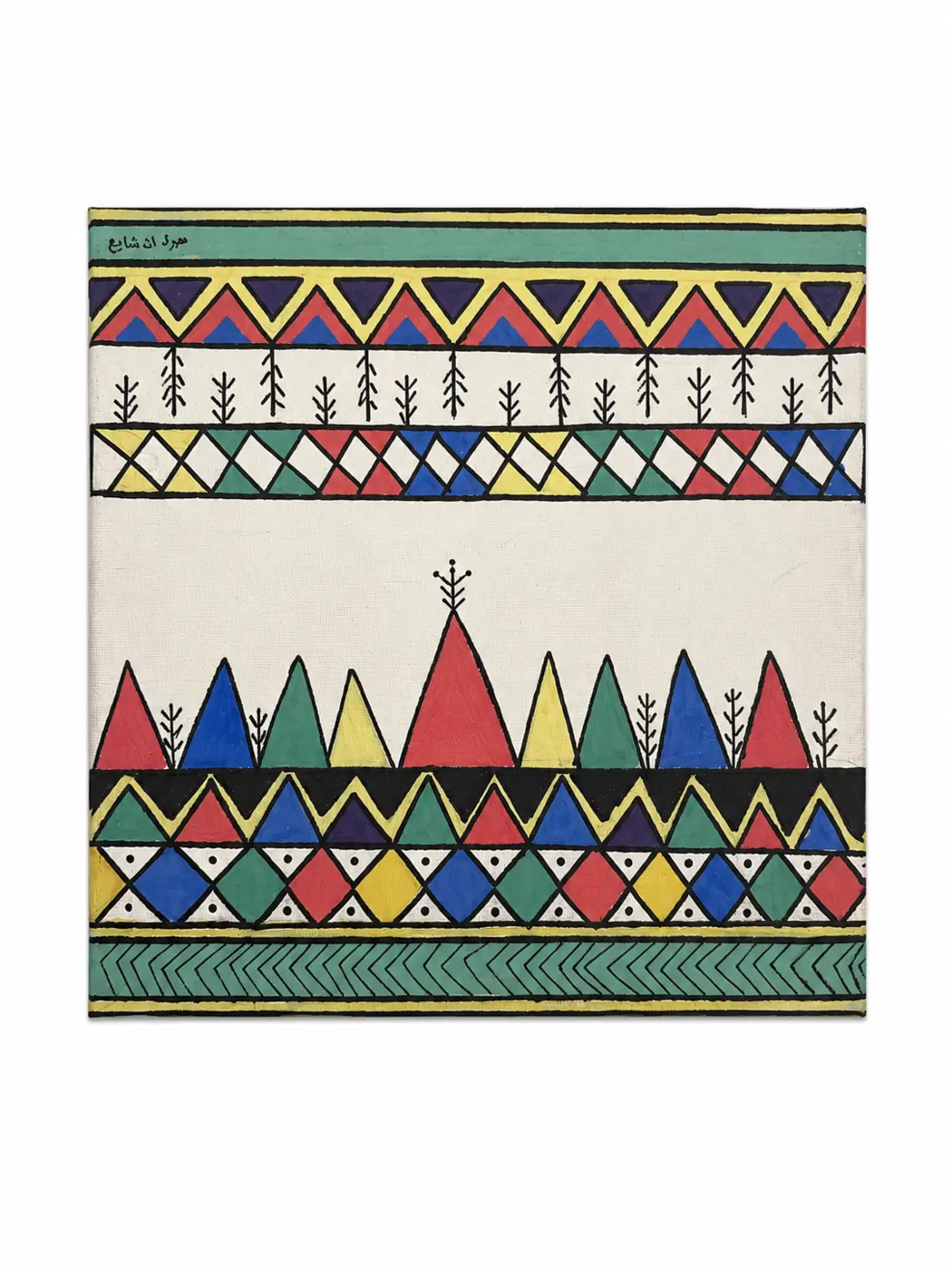
Asir / July 2026
How the work was made
Ten women each painted one canvas in answer to a single question: what does Al-Qatt mean to you. The canvases were made in museums, studios and houses across Asir, and each session ended in conversation. A collective canvas was planned and never made. Asked about painting together, most of the younger women said they now prefer to work alone. That absence is part of what this exhibition shows.
The conversations
Each session began with painting and ended in conversation. These are the four things we returned to.
Ethics, consent, and privacy
Publication is treated as a consent decision, not a design setting. All ten participants consented to be named.
The formal participant information sheet and consent form remain the authoritative documents. This website provides an accessible visual overview and does not replace them.
Ethics referenceReflective close
The answer these ten women give is that they welcome it. All ten are glad to see Al Qatt circulating, and several have carried it outward themselves. What they defend is the knowledge that gives the form its meaning, the names of the shapes, where each belongs, the occasions attached to them, and what worries them is that circulation carries the shapes without it. That knowledge once travelled with the practice, because it was learned by watching inside the house. Taught now in workshops, institutes and from screens, the stories do not always follow.
I wanted to end with one painting all ten of us made together, and I could not. At first I read that as a scheduling problem: summer, travel, families to visit. Over time I saw that failing to gather them carries a meaning of its own. The love of Qatt has not disappeared, but the conditions that let women gather and practise it together are no longer as they were. What I saw in the canvases is that the older women work from memory and from the hand, and the younger from rulers, angles and images they went looking for; not less attached, differently placed. What held the practice up in every family I visited was support inside it, husbands behind wives, mothers behind daughters. In my childhood Al Qatt was in front of me all the time and I did not see it. The painting taught me a little of the patience the work takes. The women taught me why it deserves the attention in the first place.
The value of Al Qatt is not only the shape on the wall. It is the women who practised it, and the time, effort, patience, knowledge and relationships behind it. If the meaning sits in what the maker knows, the question is not which motifs to protect but how a woman comes to know what she is drawing.